
Traditional Method 21
EPA-compliant LDAR monitoring using certified FID analyzers. NSPS, NESHAP, and state-specific monitoring requirements.
Permian Basin Air Emissions Consulting
Compliance shouldn't slow the Permian down. We partner with operators to run cleaner, prove it with confidence, and keep production moving.
See clearly. Stay compliant.
Korsa Technical operates from Midland, Texas - in the middle of the basins we serve. That means faster mobilization, crews who know your facilities, and a partner who understands what Permian operations actually look like.
We run certified Method 21 and OGI field work, handle Subpart W and GHGRP reporting, and feed it into TotalEI across the Delaware, Midland, and Central Basin Platform.
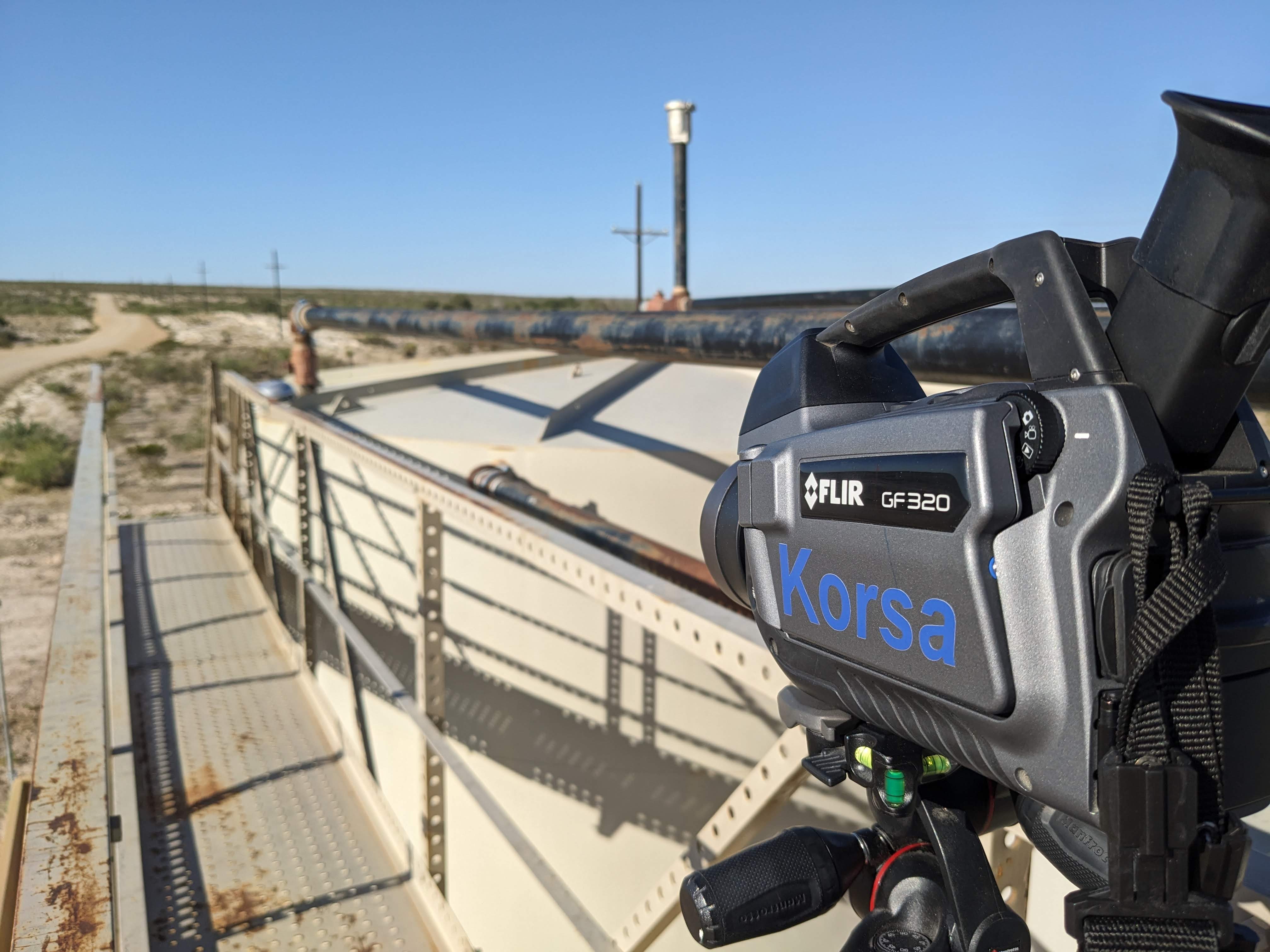
Method 21 monitoring, FLIR OGI surveys, Subpart W compressor measurements, and audit-ready LDAR and GHG documentation for Texas and New Mexico operators.
EPA-compliant LDAR monitoring using certified FID analyzers. NSPS, NESHAP, and state-specific monitoring requirements.

FLIR OGI-certified operators providing OOOOa/OOOOb/c compliance surveys, quantification studies, and voluntary methane reduction programs.

Complete Subpart W compliance - high-volume sampler compressor measurements (wet seals, dry seals, rod packing), equipment leak surveys, and GHGRP annual reporting.

Audit-ready documentation for LDAR, GHG, and Subpart W - with specialized formats for production, gathering, processing, and transmission facilities.
Operations based in Midland, Texas - with field crews deployed across West Texas and southeastern New Mexico.
Western Permian operations across West Texas and southeastern New Mexico. OGI surveys, Method 21 monitoring, and Subpart W compressor work for production and midstream facilities.
Central Permian production and gathering systems. NSPS OOOOa/OOOOb compliance, equipment leak surveys, and methane quantification programs.
Between the Delaware and Midland basins - LDAR programs for multi-site operators with consistent protocols and reporting.
Southeastern New Mexico and West Texas coverage for transmission, storage, and processing facilities requiring Subpart W and federal LDAR compliance.
Field crews mobilized across the Delaware, Midland, Central Basin Platform, and Northwest Shelf - serving production, gathering, processing, transmission, and storage operators.
Crews staged in Midland, Texas - at the center of the basins we serve - for fast mobilization and flexible scheduling.
Your emissions data - out of spreadsheets, into an audit-ready platform.
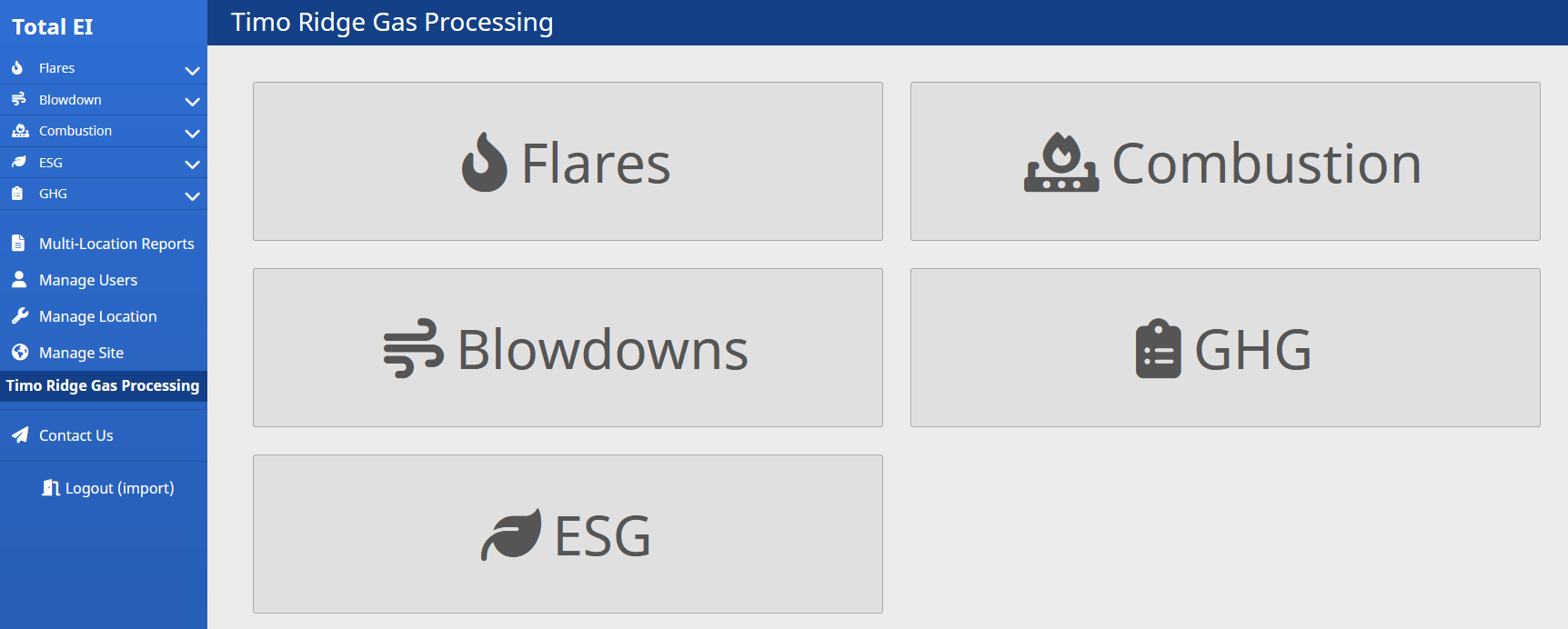
Replace spreadsheets with a centralized platform built for Subpart W, GHG, and LDAR compliance.
FLIR OGI-certified operators ensuring compliance across the natural gas supply chain:
NSPS OOOOa/b/c, Subpart W, Method 21, and state programs - documentation that holds up in audits.
Certified operators and TotalEI in one partnership. No handoffs between survey crews and spreadsheets.
Crews across the Delaware, Midland, and Central Basin Platform with flexible scheduling and quick mobilization.
Team backgrounds in plant operations, project management, and software development, plus NSPS OOOOa/b/c and Subpart W compliance work.
Founded in 2015, Korsa Technical runs LDAR and air emissions compliance programs in the Permian Basin. The team combines project management, software development, and hands-on plant operations experience.
We deliver field LDAR and OGI work, Subpart W reporting, and TotalEI across production, gathering, processing, transmission, and storage - with documentation built for audits.
ISN Member Contractor
Regulatory guidance for Permian Basin operators. Free tool: Well Closure Compliance Timeline for NSPS OOOOb (l).
LDAR (Leak Detection and Repair) is an EPA-required program to find and repair leaking equipment at oil and gas facilities - valves, connectors, pumps, compressors, pressure relief devices, and more. Monitoring frequency varies by rule (NSPS, NESHAP, state programs) and can range from quarterly to annually. Non-compliance can trigger enforcement actions and penalties. Korsa provides EPA-compliant LDAR using certified FID analyzers for Method 21 and FLIR OGI cameras, with documentation that holds up in audits.
40 CFR 98 Subpart W requires petroleum and natural gas systems to calculate and report greenhouse gas emissions to the EPA's GHGRP. It covers production, gathering, processing, transmission, and storage - including compressor rod packing, wet and dry seal emissions, equipment leaks, and facility-level calculations. Korsa provides end-to-end Subpart W services: field measurements (rod packing, wet/dry seals, leak surveys), emission factor application, calculation methodology support, and GHGRP annual reporting.
Use OGI for NSPS OOOOa/OOOOb surveys and methane quantification. Use Method 21 where the rule requires it or you need ppm-level screening. Many sites run OGI for routine surveys and Method 21 for repair verification.
NSPS OOOOb establishes updated methane and VOC standards for new, modified, and reconstructed oil and gas sources - including super-emitter response, pneumatic controller requirements, and compressor rod packing monitoring. OOOOc extends similar requirements to existing sources. Korsa helps Permian Basin operators navigate both rules with OGI surveys, Method 21 verification, rod packing measurements, and audit-ready documentation aligned with EPA timelines.
We use calibrated high-volume samplers (HVS) to measure volumetric flow from compressor vents - rod packing vents on reciprocating compressors and dry seal vents on centrifugal compressors. NSPS OOOOb sets flow rate thresholds for these vents, and direct HVS measurement tells you whether packing or seals need repair or replacement before an exceedance becomes a violation. Every measurement is documented in audit-ready reports and can flow straight into TotalEI alongside your Subpart W data. Free field-planning tool: GFM 2.0 Extension Pole Calculator.
TotalEI is our emissions management platform built specifically for Subpart W, GHG, and LDAR compliance. It centralizes compressor measurements, equipment leak data, flare and blowdown tracking, and GHGRP reporting in one system - with audit trails, version control, and role-based access. Unlike spreadsheets, it enforces calculation methodologies, supports thousands of concurrent users across multiple sites, and produces documentation that auditors expect.
Both. You can use Korsa for field work only (Method 21, OGI, Subpart W surveys), TotalEI only (if you have in-house field teams), or the full package. Many clients start with field services and adopt TotalEI when they outgrow spreadsheets. The combination gives you certified operators plus a platform that captures and reports the data they collect - reducing handoffs and keeping everything audit-ready.
Quickly - our crews are based in Midland, at the center of the Permian. Contact us with your facility type, scope (OGI, Method 21, Subpart W compressor work, etc.), and target dates - we'll work with you to align resources and get on site across the Delaware, Midland, and Central Basin Platform.
Outsourcing provides certified operators, specialized equipment (FLIR OGI cameras, FID analyzers), and deep regulatory expertise without the overhead of training, certification maintenance, and equipment calibration. Korsa scales for multi-site Permian programs and integrates field data directly into TotalEI - giving you consistency across basins without building an in-house environmental team.
Partner with our team to develop audit-ready LDAR practices and reduce emissions across your Permian Basin operations.
2028 E Ben White Blvd, Suite 240-1080
Austin, TX 78741
Monday - Friday: 8:00 AM - 5:00 PM CT
Saturday - Sunday: Closed
Operations based in Midland, TX. Field crews deployed across the Delaware, Midland, Central Basin Platform, and Northwest Shelf.